
Why I Became a Therapist: The Stories That Led Me Here
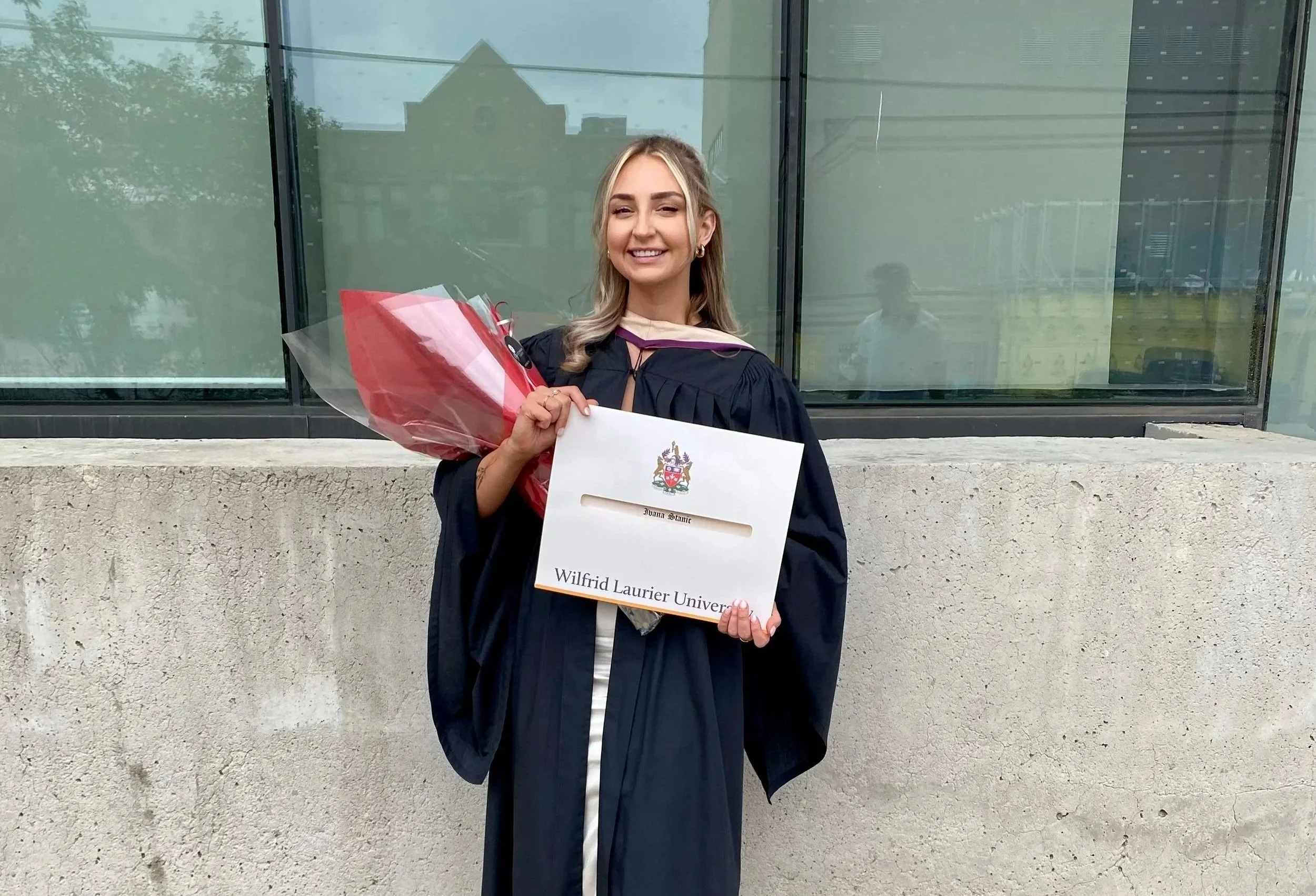
Graduating my Masters of Social Work
More than one client has told me they hope they're not being annoying, bringing up the same worry about their relationship again, or the same pattern they thought they'd already worked through. I always tell them the same thing, it's not annoying, it’s literally my job and why I am here.
People apologize for taking up space with their own stories more often than you'd think, like they need permission for it. But hearing someone's story, really hearing it, has never once felt like a burden to me. It's the part of the work that I love most, and it's the reason I do it at all.
Where It Started
Long before I had any language for social work or psychotherapy, I knew people growing up who needed more support than they were getting. I watched what it cost when that support wasn't there, and I watched what it meant when someone actually showed up for a family that needed it. I was always on the quiet side, (which many people would find hard to believe now), until someone needed speaking up for. I didn't have a plan yet for my future. I just knew I wanted to be someone who showed up.
For a while, I assumed that meant political science, being a politician was the only thing I thought I could do I guess. It felt like the obvious path if you wanted to understand how the world worked and maybe do something about it. But I changed my mind before I'd even started my first class. Learning about the discipline of sociology in one of my last high school classes made me change my entire career route because politics suddenly felt unlike me. I wanted to understand the people and families living inside those systems, so that’s what I did and added a minor in psychology. I still didn't know exactly where it would lead.
What I Learned
It turned out to be the right choice, just not in the way I expected. Studying sociology cracked something open for me. I learned how much of our systems, healthcare, education, housing, the justice system, are built and sustained on people who are marginalized or living in poverty. That wasn't an abstract idea to me. It made me angry in a way that felt useful, and it convinced me that policy was where I needed to be. If the systems were the problem, I wanted to be close enough to them to change them.
So I trialled doing research and policy analysis at the federal level, work that touched real issues, social determinants of health, the role Indigenous communities should have in shaping the policies that affect them. I learnt so much, and I don't regret it. But I also learned something about myself that year that changed everything after it: I couldn't do this work from behind a desk. I needed to be in the room with people, not several steps removed from them in a policy brief. Which brought me to my Masters in Social Work.
Boots on the Ground
That's a phrase I've used for years now, often enough that people who know me can probably hear me saying it. I went looking for exactly that, and I found it in youth residential care, in family services, eventually in child welfare. I sat with teenagers in crisis. I helped coordinate care plans and safety plans. I walked the streets of Ottawa listening to stories while doing outreach for those in need. I sat across from families at some of the hardest moments of their lives and did my absolute best.
I loved it. I loved hearing people's stories, even the hard ones, especially the hard ones. But something else followed me through every one of those roles too: the same frustration, over and over. The limits of the very systems I had studied, the ones I'd once believed I could help fix from a policy desk, were now the exact things standing between me and the people I was trying to help. Paperwork, caseloads, lack of funding, bureaucracy, staff shortages. Rules that made sense on paper and made no sense at all in someone's living room. I had a lot of frustration with it, more than I can fully put into words here.
What Never Changed
Here's what stayed constant through all of it, through every job and every system and every limitation I ran up against: the relationships. The stories. Sitting with someone while they told me what was actually going on for them, and watching something shift just because they had finally been fully heard, that never once got old. It was the one part of the work no policy, no caseload, no bureaucratic limit could take away from me.
Eventually I realized that the thing I'd actually been chasing all along wasn't the system-level change I once thought I wanted. It was this. The relationship in front of me. The story someone trusted me enough to tell.
Why I Do This Now
That realization is what eventually led me to psychotherapy, and later, to opening my own practice. I wanted to build something where the relationship could be the center of the work itself, not something squeezed in around the edges of a system's limitations.
It’s part of why I’m drawn to approaches like the Gottman Method, Emotionally Focused Therapy, and trauma-informed work. Across my career, I’ve kept coming back to the same idea: that real, attentive, honest connection is often what helps people begin to change. Whether that’s the relationship we have with a partner, with ourselves, or with the parts of us shaped by difficult experiences, healing often happens through feeling understood, safe, and genuinely supported. Not a technique applied to someone from the outside, but a relationship and process built carefully, together, over time.
So when a client tells me they're worried they're repeating themselves, or that their story isn't interesting enough to keep bringing up, I mean it completely when I tell them otherwise. The stories are why I'm here. They always have been.
If you're thinking about reaching out, whatever your story is, I'd be glad to hear it.